
Bespoke CNC milling and engraving of plastics
Bespoke CNC milling of plexiglass and engineering plastics
The company PLEXIPLAST s.r.o. specialises in bespoke CNC milling, engraving and precision machining of plastic materials. Thanks to our in-house technological equipment, we offer the manufacture of plastic parts, structural components, advertising elements and bespoke products tailored to individual customer requirements.
On our CNC milling machines, we primarily process acrylic (PMMA), solid polycarbonate (PC), PET-G, PVC, polyethylene (PE), polypropylene (PP) and other engineering plastics. Depending on the nature of the order, we also machine aluminium composite panels and other suitable sheet materials.
CNC milling enables the precise shaping of contours, edge machining, and the production of holes, grooves, pockets, recesses and other design features. Unlike the simple cutting of plastic sheets, this technology is also suitable for the production of components that are more complex in terms of shape and design.
We undertake the production of individual prototypes, one-off orders and repeat production runs. Depending on the customer’s requirements, we also offer follow-on operations such as drilling, polishing, bending, bonding and the assembly of plastic products.
PLEXIPLAST – precision CNC machining of plastics, from raw material to finished product.
CNC milling of plastics – precision machining to specification
CNC milling is a machining process in which a rotating cutting tool removes material in accordance with a pre-programmed sequence.
Thanks to computerised control, it is possible to produce the required dimensions, contours, holes and structural elements with a high degree of repeatability in the manufacturing process.
Plastic milling is particularly suitable for the manufacture of technical and structural components, where dimensional accuracy, surface finish and the ability to produce more complex geometries are important.
We use our CNC machining technology, for example, for:
- Shaped milling of plastic sheets – production of parts to the required contours and dimensions.
- Milling of holes and cut-outs – preparation of assembly and process holes.
- Milling grooves and pockets – the production of structural components to the required depth.
- Machining of side edges – chamfering, profiling and preparation of joint surfaces.
- Manufacture of plastic components – structural parts for machinery, equipment and process units.
- CNC engraving – creating inscriptions, symbols, scales and other surface features.
- Bespoke production of promotional items – milled lettering, logos, panels and design elements.
We select the specific manufacturing process based on the type of plastic, the thickness of the material, the product’s geometry and the required precision.
CNC milling of PMMA plexiglass – extruded XT and cast GS
Acrylic milling is one of our core production technologies. It enables us to process clear, opal, coloured and other types of acrylic sheets.
Plexiglas is characterised by high optical clarity, a high-quality surface and good machinability.
Milling of extruded XT plexiglass
We use extruded plexiglass PMMA XT primarily in the manufacture of advertising displays, protective covers, structural components, display stands and other bespoke products.
CNC milling enables the creation of precise cut-outs, holes, grooves and finished edges.
When machining, we take into account the properties of the extruded material, including any internal stresses and their effect on subsequent processing.
Milling of GS cast plexiglass
Cast plexiglass PMMA GS is particularly suitable for the manufacture of technical and design components, more complex structural elements and products requiring high-quality mechanical machining.
It offers good options for milling contours, grooves, pockets and other three-dimensionally shaped features.
With the right manufacturing process, the visible surfaces and edges of plexiglass components can also be machined and polished.
Milling of thicker plexiglass sheets and blocks
For thicker plexiglass sheets and block materials, CNC milling is often more suitable than laser cutting.
According to the technical specifications, it is possible to create deeper pockets, stepped features, shaped transitions and other design details that cannot be achieved by simple flat-surface cutting.
We always assess the suitability of a particular technology based on the product’s dimensions, the required machining depth and the material available.
Milling of polycarbonate, PET-G and PVC sheets
As well as plexiglass, we also machine other transparent and engineering plastics, the properties of which require the individual selection of milling tools and cutting conditions.
CNC milling of polycarbonate (PC)
Solid polycarbonate (PC) is a transparent engineering plastic characterised by very high impact strength.
We use polycarbonate milling in the manufacture of protective machine covers, safety viewing windows, technical panels, assembly parts and other structural components.
Using CNC machines, we carry out profile milling and the production of holes, grooves and other features.
When machining polycarbonate, it is important to set the machining parameters correctly, particularly due to the heating of the material and the quality requirements for the machined edge.
CNC milling PET-G and A-PET
We use PET-G and A-PET polyester sheets in the manufacture of transparent covers, advertising elements, structural components and other products.
CNC milling enables the creation of the required contours, holes and other machined cut-outs.
We select the appropriate machining process based on the specific type of material, its thickness and its intended use.
CNC milling of PVC-U
Rigid PVC-U is one of the materials suitable for mechanical machining and the manufacture of engineering components.
We mill both transparent and opaque PVC sheets, depending on the specific material type.
We use CNC machining of PVC, for example, in the manufacture of structural parts, covers, industrial panels and technological components.
The advantage of mechanical milling is that it allows PVC to be machined without the use of a laser beam, which is unsuitable for materials containing chlorine.
CNC milling of engineering and industrial plastics
In addition to transparent materials, we also provide machining services for engineering and industrial plastics used in the manufacture of machine parts, process equipment and other technical products.
We specialise in:
- Polyethylene (PE) – including PE 300, PE 500 and PE 1000 materials, used for structural components, sliding elements and industrial applications.
- Polypropylene PP-C and PP-H – suitable for the manufacture of chemically resistant components, process structures and plastic equipment.
- Polyamide PA6 (nylon) – an engineering material used for mechanically stressed components, guide elements and other machine parts.
- Polyoxymethylene (POM) – an engineering plastic with good dimensional stability and sliding properties, suitable for precision structural components.
- Polytetrafluoroethylene (PTFE) – a material with specific chemical and lubricating properties, used, for example, in certain technical and sealing components.
Depending on the specific order, we also machine other suitable sheet and structural plastics.
When selecting a material, we take into account its mechanical properties, dimensional stability, chemical resistance, operating temperature and the intended use of the product.
Milling of grooves, pockets, holes and structural features
One of the main advantages of CNC machining is the ability to create not only the outer contour of a product, but also precisely defined structural features.
Milling grooves and pockets
We mill grooves, recesses and pockets into plastic sheets and structural semi-finished products in accordance with the technical documentation provided.
These elements can be used, for example, to mount additional parts, route components, for assembly purposes, or to create the required structural geometry.
Milling holes and countersinks
We also use CNC machining to produce mounting holes, precision cut-outs and countersinks for fasteners.
Depending on the customer’s requirements, several machining operations can be combined on a single workpiece.
Profile milling and edge finishing
We offer edge machining, deburring, chamfering and other shaping services for plastic parts.
Depending on the nature of the material and the desired result, this may be followed by polishing or another finishing operation.
Milling of side edges, drilling and threading of plastics
In addition to CNC surface milling, we also offer machining of the side edges and end faces of plastic parts.
Using suitable clamping and tooling, we carry out the following, for example:
- Milling and shaping of side edges.
- Preparing holes in the edges of plastic sheets.
- Drilling holes for fasteners.
- The production of selected threaded holes.
- Chamfering edges and preparing mounting surfaces.
- Modifications to the side profiles in accordance with the technical drawing.
These processes are used in particular in the manufacture of housings, plastic assemblies, industrial components, structural joints and production jigs.
The feasibility of producing threads and other features depends on the type of plastic, the thickness of the material, the required dimensions and the mechanical stress on the resulting joint.
Examples of milling side edges and structural details
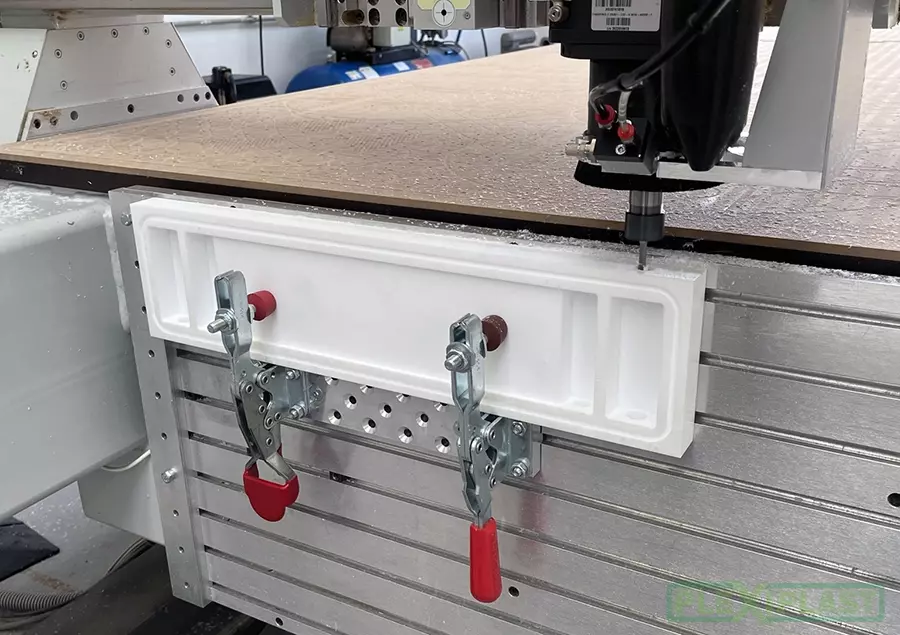
PTFE Teflon Machining
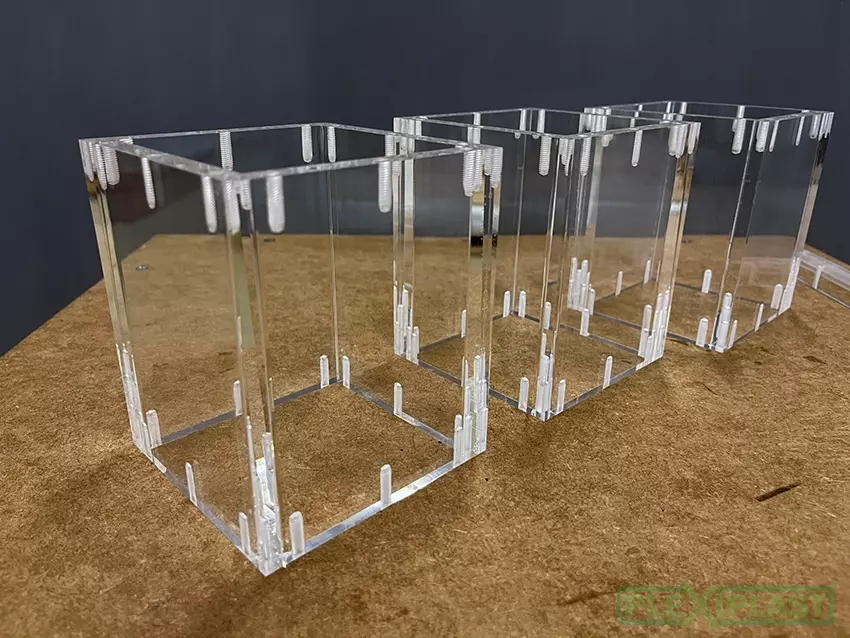
Drilled and threaded holes in the edge of a plastic component
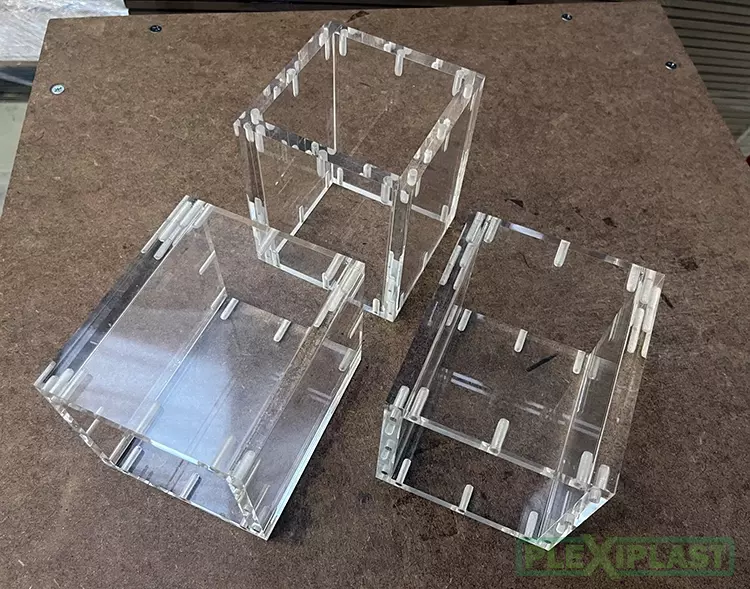
Drilled and threaded holes in the edge of a plastic component
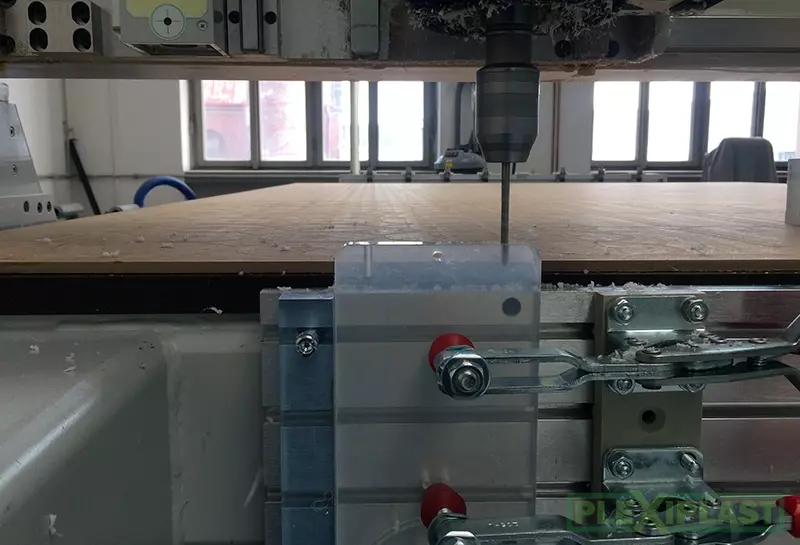
Detail of CNC machining of the side edge of a plastic component
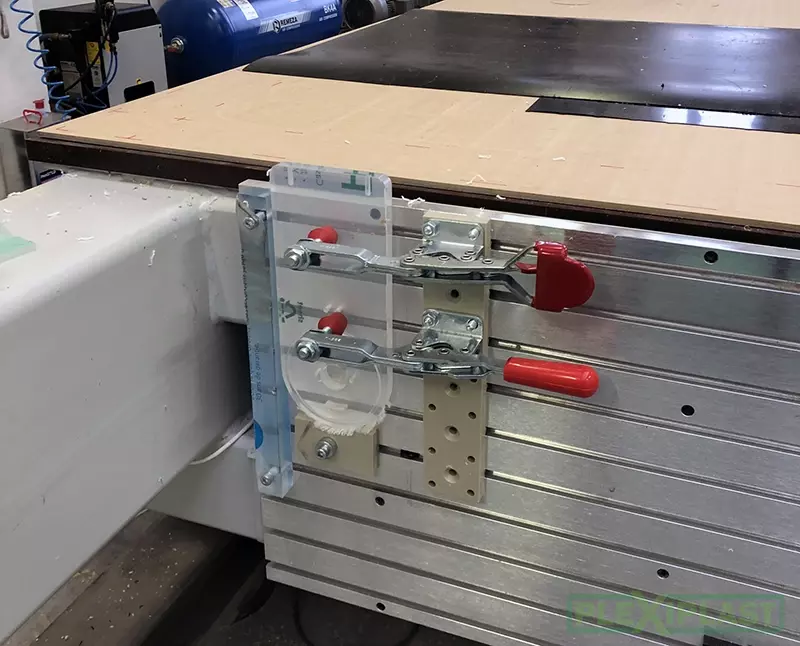
Detail of CNC machining of the side edge of a plastic component
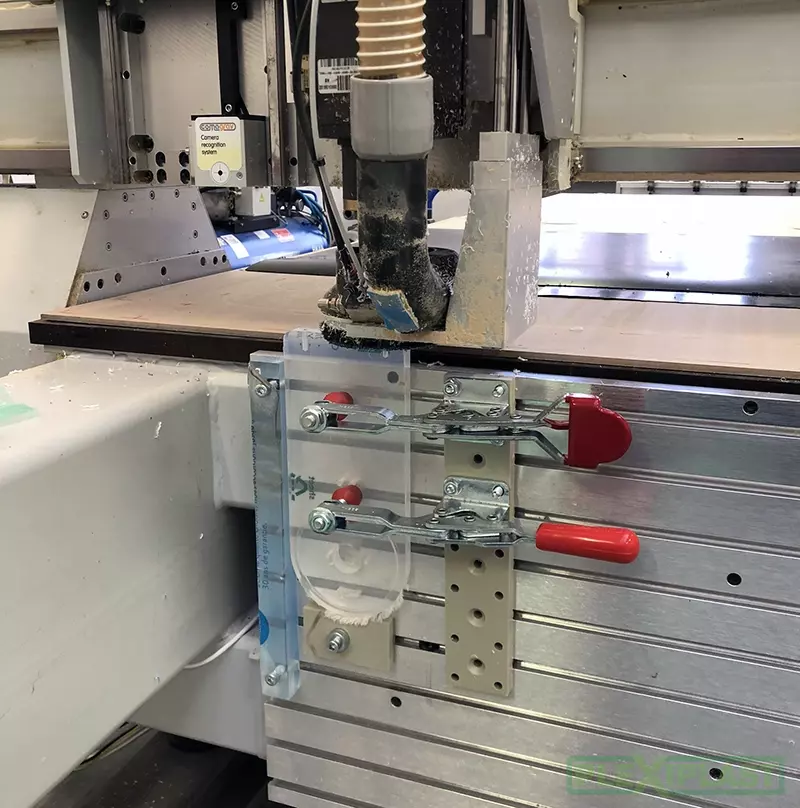
Detail of CNC machining of the side edge of a plastic component
CNC engraving of plexiglass and plastic materials
As well as milling, we also offer CNC mechanical engraving of plastics, which enables the creation of precise inscriptions, symbols, logos, scales and other graphic or technical elements.
Unlike laser engraving, mechanical engraving involves removing material with a cutting tool.
The final appearance and depth of the engraving can be adjusted to suit the chosen tool, material and desired result.
CNC contour engraving
Outline engraving is suitable for producing lines, text, product markings, technical symbols and other simple graphic elements.
The tool follows a pre-programmed path and creates the required engraving in the material.
Deep and surface engraving
For selected products, it is also possible to create wider or deeper engraved areas.
This process may be suitable, for example, for the production of company labels, information boards, wayfinding signs, advertising logos or technical markings.
Engraving of technical components
We also use CNC engraving to mark structural and industrial components, for example with serial numbers, orientation marks or assembly symbols.
We always assess the suitability of engraving based on the material, the available surface area and the required legibility.
CNC milling of aluminium composite panels
We also use CNC milling technology when machining aluminium composite panels, known by the trade names DIBOND®, ALUCOBOND® and other names.
These materials are used in the manufacture of advertising hoardings, company signs, wayfinding systems, cladding elements and other flat structures.
We provide shaping, contour milling, hole drilling and the preparation of structural components.
In the case of suitable types of composite panels, grooves can also be milled to enable the material to be bent and shaped three-dimensionally.
In addition to composite panels, we also offer a separate CNC machining service for selected aluminium sheets and panels in accordance with technical specifications.
The advantages of CNC milling over laser cutting
CNC milling and laser cutting are two distinct technologies that complement each other well in plastics processing.
CNC milling is particularly advantageous when we need:
- To machine materials that are not suitable for laser cutting.
- Create grooves, pockets, recesses and other features to the required depth.
- To machine thicker sheets or blocks of plastic.
- Milling side edges, chamfers and structural profiles.
- To manufacture engineering components with specific requirements regarding geometry and machining.
- Use machining without the cutting edge being affected by the heat of the laser beam.
Laser cutting, on the other hand, is often the preferred method for fine, flat cut-outs from plexiglass, more complex contours and applications where a smooth, optically clear edge is required.
Both technologies have their advantages and limitations. We therefore tailor our choice of manufacturing process to the specific material, dimensions, required precision and cost-effectiveness of the order.
Custom manufacture of milled plastic parts
We use CNC milling in the manufacture of plastic components for industry, engineering equipment, advertising systems and design applications.
Typical products include:
- Protective covers and safety components – milled parts made from plexiglass and polycarbonate, designed for further fabrication and assembly.
- Industrial plastic components – mounting plates, brackets, guide elements, structural fillers and other components in accordance with the technical documentation.
- Advertising and information elements – shaped cut-outs, advertising signage, company logos and milled substrates for advertising systems.
- Plastic boxes, display cases and stands – precisely machined components designed for subsequent bending, gluing or mechanical assembly.
- Design and architectural elements – custom-shaped plastic components, decorative panels and bespoke products.
By combining CNC machining with PLEXIPLAST’s other technologies, we are able to offer the manufacture of both individual components and complete plastic products.
Examples of CNC milling of plastics and bespoke manufacturing
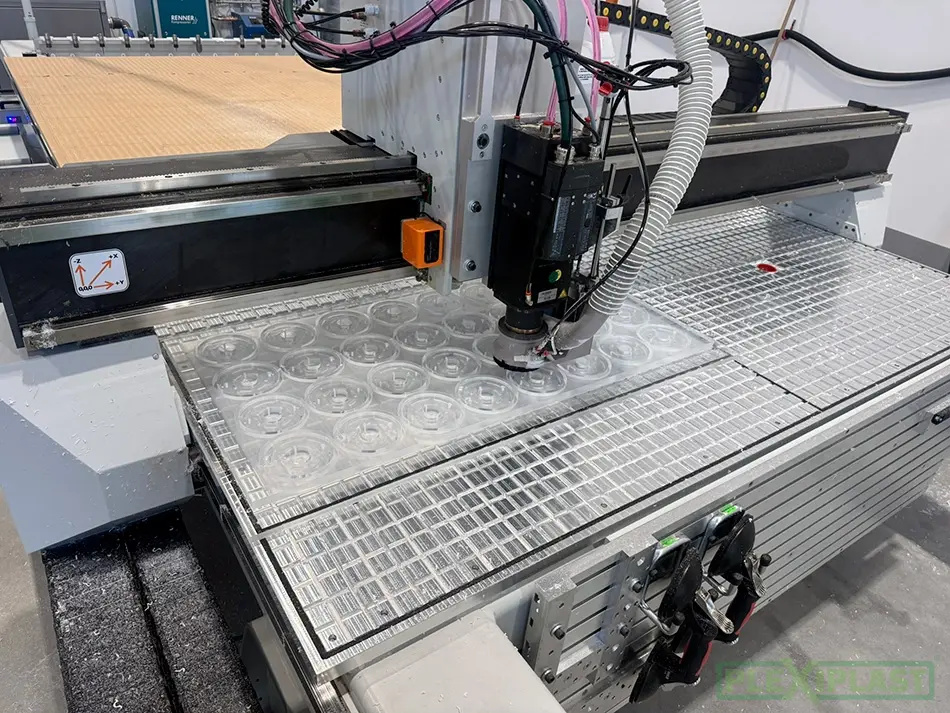
CNC router for machining plastic and aluminium sheets
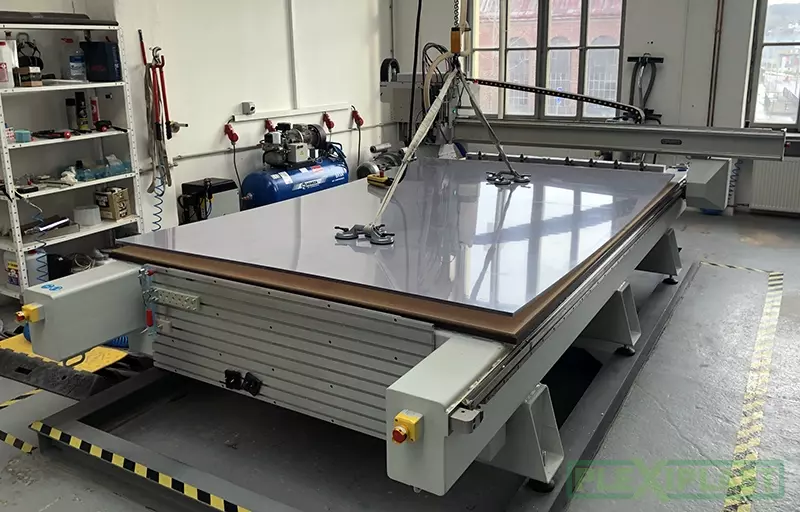
CNC milling of plastic sheets
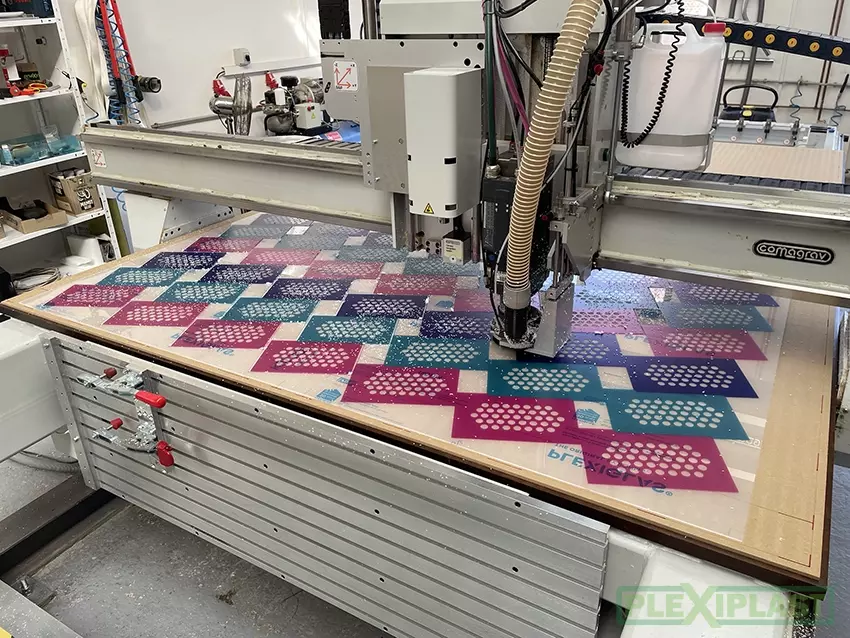
CNC milling of printed plastic sheets
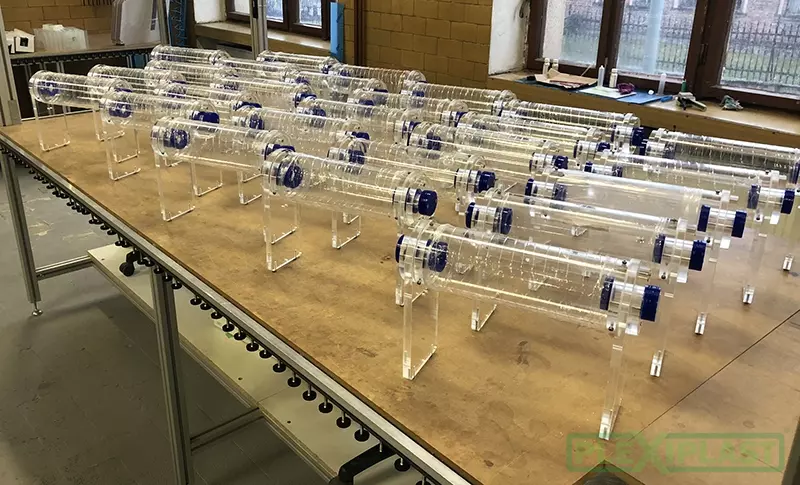
Custom-milled plastic bracket
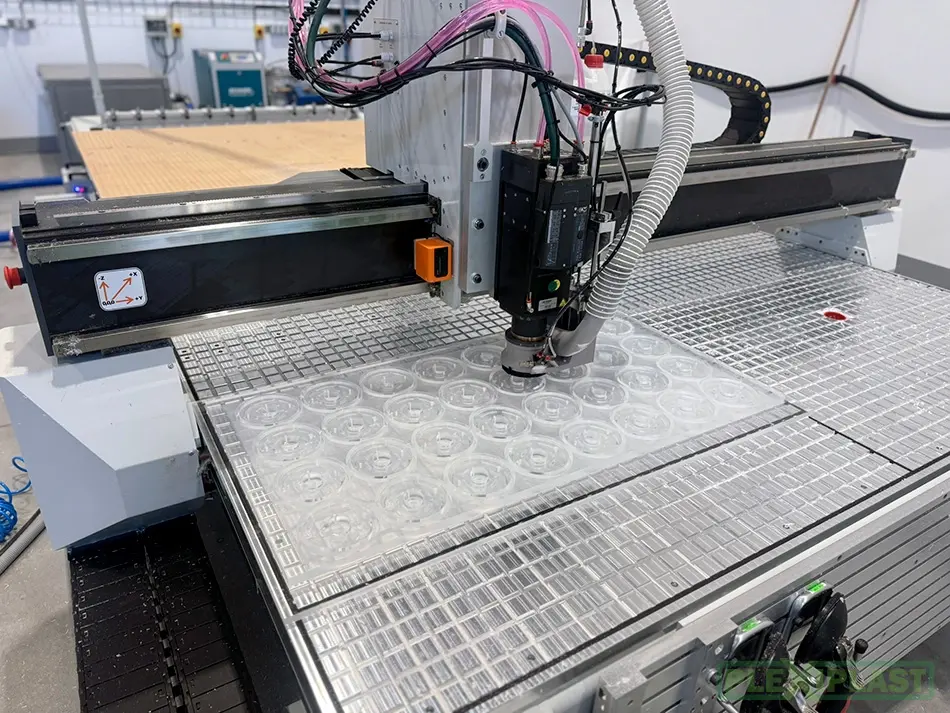
Plastics processing machinery
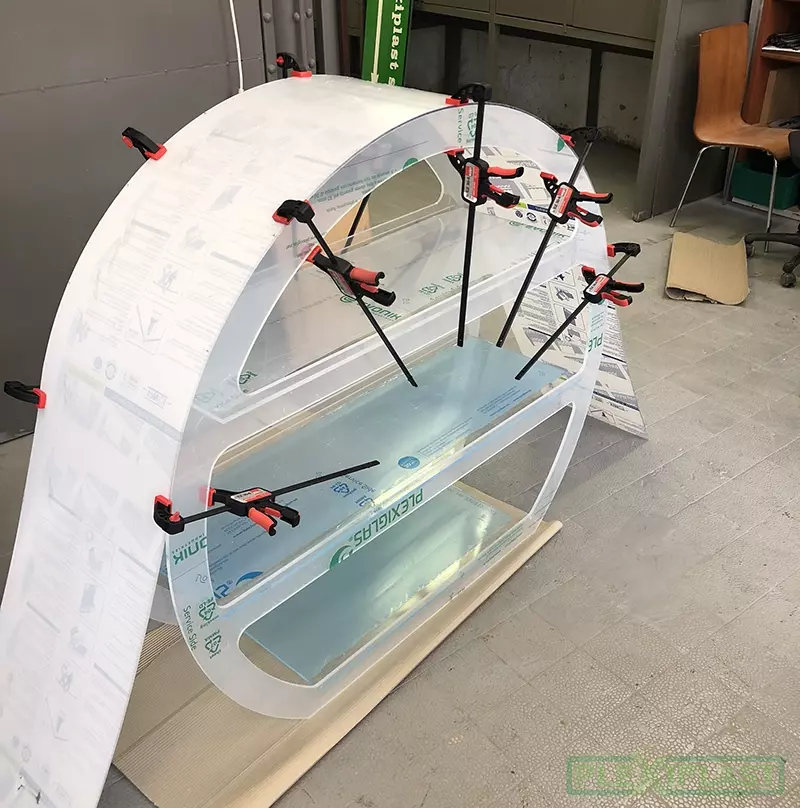
Milled plexiglass components for the manufacture of display cabinets
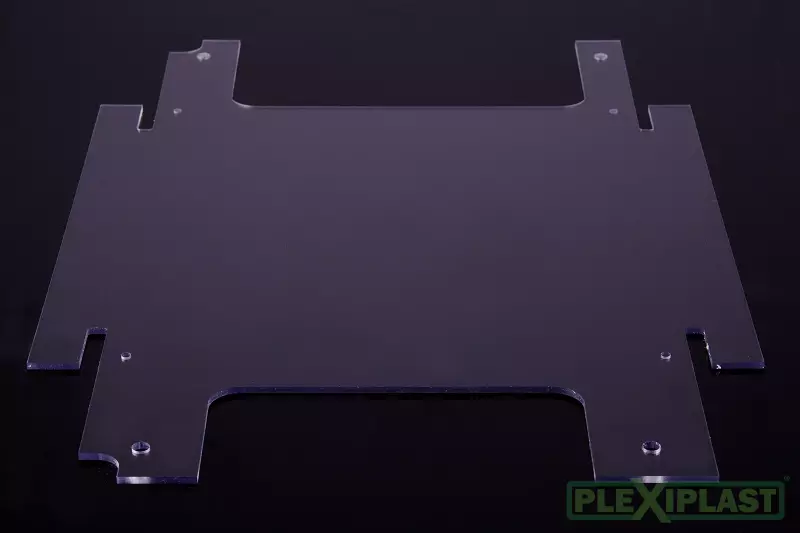
Demonstration of the production of a milled semi-finished product
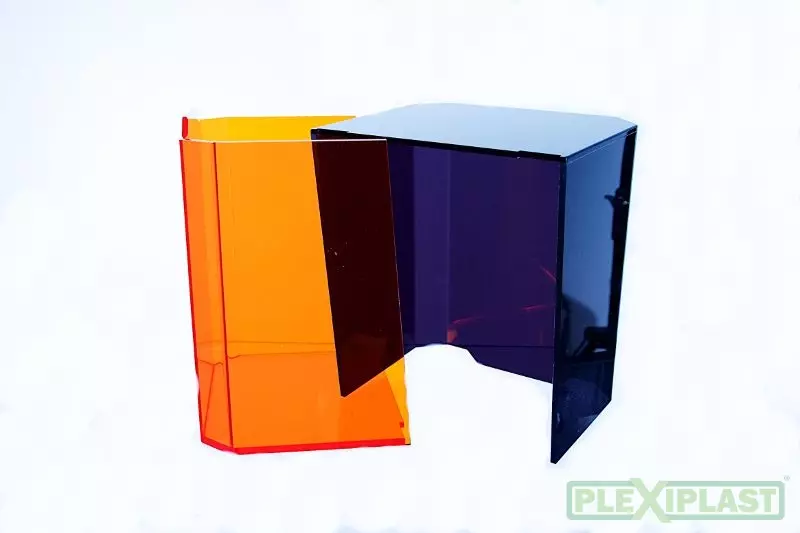
Milled Plexiglas covers
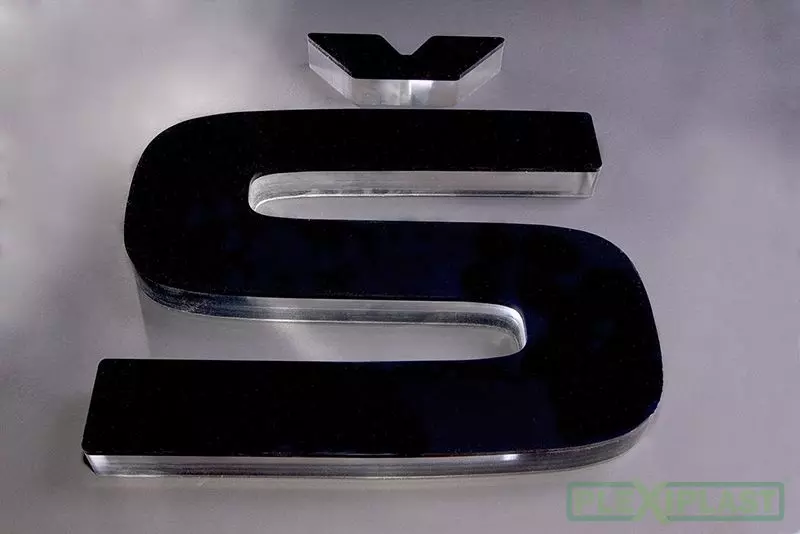
Channel letters (3D letters) from colored materials
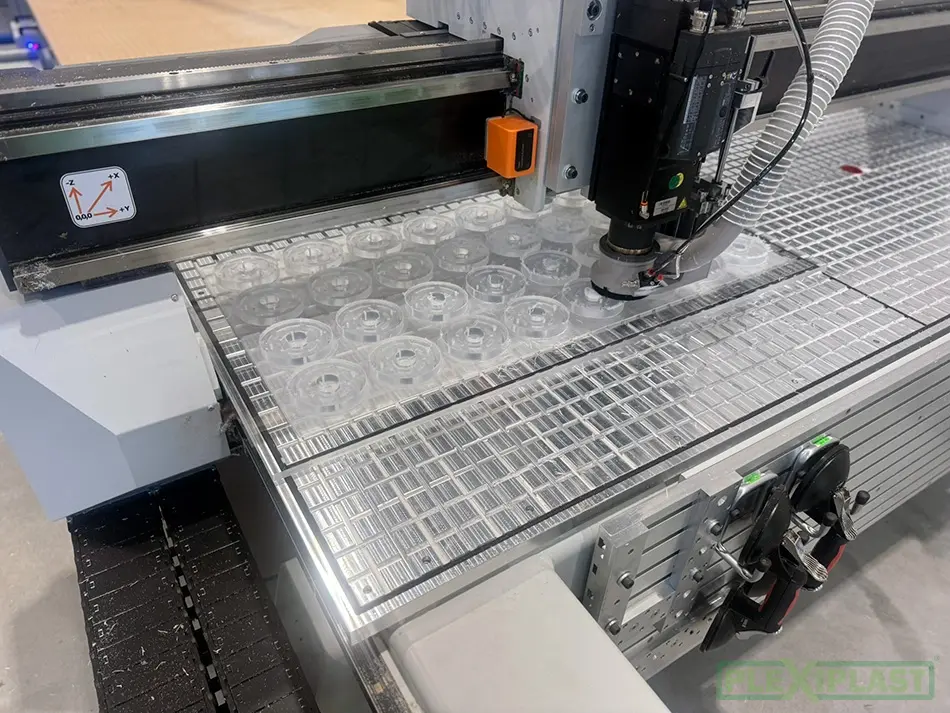
Plastics processing machinery
Single-off, prototype and mass production of plastic components
We provide the manufacture of individual prototypes, bespoke parts, small production runs and repeat deliveries of plastic components.
Our services are used by manufacturing companies, engineering firms, advertising agencies, architectural practices and customers who require bespoke technical solutions.
CNC programming enables the repeat production of parts in accordance with the prepared technical documentation. For repeat orders, this allows a consistent manufacturing process to be maintained and the required dimensions to be checked.
The service may also include other related processes, such as drilling, engraving, polishing, bending, bonding or product assembly.
Our aim is to offer our customers not only CNC milling of plastic semi-finished products, but also comprehensive bespoke processing right through to the final product.
How do I order CNC milling or engraving of plastics?
To enable us to prepare a quotation, please send us some basic information about the product you require.
We recommend that you include:
- Material – for example, PMMA XT, PMMA GS, PC, PET-G, PVC-U, PE, PP, POM or PA6, HPL sheets (high-pressure laminate), HPS / HIPS (high-impact polystyrene).
- Dimensions and thickness of the semi-finished product.
- Required quantity and any repeat orders.
- Technical documentation – ideally a drawing in PDF, DXF or DWG format; for parts with more complex geometries, a 3D STEP model may be required.
- Required tolerances and critical functional dimensions.
- Surface and edge finish requirements.
- Further processing operations – drilling, engraving, polishing, bending or assembly.
If you haven’t yet chosen a material, we’d be happy to recommend a suitable solution based on the mechanical, chemical and thermal loads.
For more complex parts, it is advisable to also include information on how to use and assemble the product, as well as its required specifications.
Based on the documentation you have sent, we will assess the technical feasibility of production and prepare a bespoke quotation.
Do you need CNC milling of plexiglass, plastic engraving or bespoke manufacturing of technical components? Contact PLEXIPLAST via the enquiry form or by email at info@plexiplast.cz.
Related materials and manufacturing technologies
Take a look at our other options for custom processing of plastic materials:
Technical Advisor
Contact our experienced technical advisor to find out all about the prices and processing options for the materials listed
BY PHONE
VIA EMAIL