Professional bonding of plexiglass and plexiglass products
Bespoke bonding of PMMA XT and GS plexiglass
The company PLEXIPLAST s.r.o. specialises in the professional bonding of plexiglass, the manufacture of bonded plexiglass structures and the surface bonding of acrylic sheets.
Using appropriate manufacturing processes, we assemble individual components made from extruded PMMA XT plexiglass and cast PMMA GS plexiglass. We manufacture transparent covers, display cases, plastic boxes, stands, advertising elements and bespoke technical and design products.
We place great emphasis on the precise preparation of parts, the quality of the glued edges, the required strength of the joint and the final appearance of the product.
Depending on the nature of the order, we use various bonding technologies, including single-component and two-component adhesive systems. We also offer surface bonding and laminating of plexiglass sheets, which enables the creation of thicker semi-finished products, colour combinations and special structural or decorative elements.
Thanks to our in-house CNC milling, laser cutting and plexiglass polishing facilities, we are able to produce individual components and then assemble them into the finished product.
PLEXIPLAST – precision bonding of plexiglass and bespoke manufacture of bonded plexiglass products.
Plexiglas bonding technology – single-component and two-component adhesives
When bonding plexiglass, it is important to choose the appropriate technique depending on the type of material, the geometry of the joint, the required strength and the optical quality.
Individual adhesive systems differ in terms of their curing mechanism, viscosity, ability to fill the joint and the resulting properties of the bond.
Bonding plexiglass with a single-component adhesive
We use single-component adhesive systems primarily to create suitable bonds between precisely prepared plexiglass components.
With certain low-viscosity adhesives, it is possible to use capillary application, whereby the adhesive penetrates the narrow gap between individual sections of the material.
This technology is suitable, for example, for certain types of bonded covers, simple plexiglass boxes and other products with well-prepared bonding surfaces.
The final quality depends on the type of plexiglass, the precision of the edge finishing, the internal stress in the material and the adhesive system used.
A single-component adhesive does not necessarily mean a solvent-based adhesive – there are also systems that cure in other ways. We therefore select the specific technology based on the desired result.
Bonding plexiglass with a two-component adhesive
We use two-component polymerisation adhesives for projects that require specific joint properties, such as the ability to fill gaps, high optical quality or suitable structural strength.
This technology may be suitable for more demanding aesthetic products, more complex designs and selected applications involving the joining of materials over a large area.
The preparation of the adhesive and the bonding process itself require strict adherence to the technical procedure.
With the right choice of material and processing method, it is possible to achieve high-quality, clear and visually unobtrusive joints.
However, we cannot automatically guarantee that the result will be completely invisible or free from any visual defects. We assess it in accordance with the requirements of the specific product.
Technologické porovnání použitých lepidel:
One component adhesive gluing
Basic type of glued joints in quotations- The cheaper and more common way of gluing edges
- Small, visible bubbles may appear in the joint
- A quick and efficient way
- The most commonly used
- Standard bonding method in quotations
- Possibility of gluing edges and surfaces of material boards
Two-component adhesive gluing
Technologically, time-consuming and financially more demanding bonding of Plexiglas.- A more expensive bonding method
- Visually higher quality bonded joint
- The potential to achieve high strength with the right material and technology
- Technologically and time consuming
- Requires precise preparation, experience and skill of the worker
- Possibility of gluing edges and surfaces of material boards
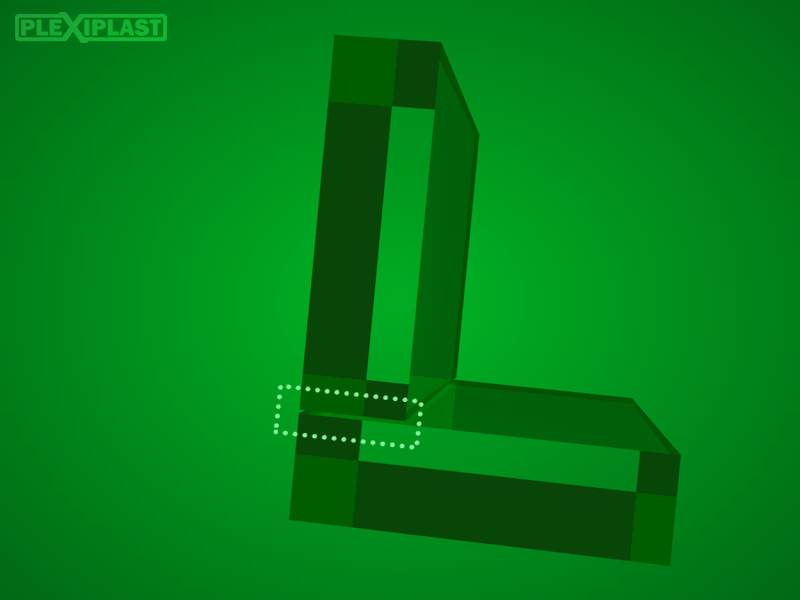
Bonding plexiglass edges – butt joint and at a 45° angle
In the manufacture of three-dimensional plexiglass structures (such as plexiglass boxes and covers), joints between the edges and surfaces of individual sheets are most commonly used.
Bonding plexiglass end-to-end
Butt-gluing is a joining method in which the edge of one board is joined to the surface of another board, or in which the prepared end faces of the material are joined in a corresponding manner.
We use this process, for example, in the manufacture of plexiglass covers, display cases, boxes and other rectangular structures.
One advantage is the ability to create precisely defined joints from individual panel components.
The quality of the finished product depends primarily on the perpendicularity, flatness and preparation of the surfaces to be joined.
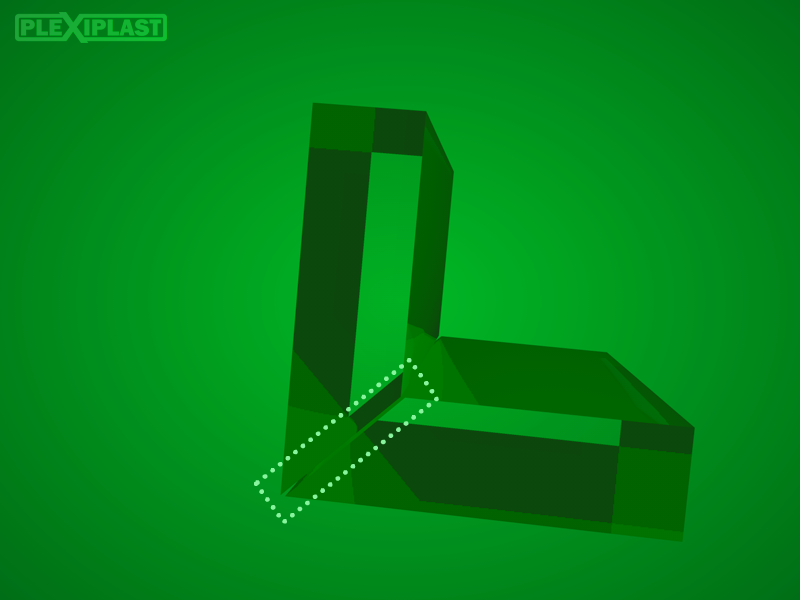
Gluing plexiglass at a 45° angle
Gluing edges at a 45° angle, also known as mitre jointing, allows you to create visually interesting corner joints.
This technology may be suitable for display cabinets, designer boxes, plinths and other products intended to be on display.
When finished correctly, it is possible to create a seamless corner with the joint barely visible.
Manufacture requires precise milling of the individual edges and the use of a suitably chosen joining technique.
Butt joints gluing
Gluing at 45°
Optical quality of bonded joints and edge preparation
When manufacturing transparent plexiglass products, one of the most important requirements is the appearance of the bonded joint.
A carefully chosen process can significantly minimise the visibility of the joint and help to achieve a neat, professional finish.
The following factors have the greatest influence on quality:
- Type and thickness of plexiglass.
- The quality of the preparation of the edges to be joined.
- The precision with which the individual parts are assembled.
- Internal stress in the material.
- Type of adhesive and method of curing.
- Geometry and loading of the resulting joint.
Incorrect processing may lead to the formation of air bubbles, tiny cracks, optical irregularities or other defects.
When designing a product, we therefore also take into account any prior machining, bending and the possible need for further manufacturing operations.
Surface bonding and laminating of plexiglass sheets
As well as edge bonding, we also specialise in flat bonding of plexiglass, in which individual sheets or blocks are bonded together across a large part of their surface.
This technology makes it possible to produce layered semi-finished products with the required final thickness or to combine different coloured and transparent materials.
We use full-surface bonding, for example, in the manufacture of bespoke design components, promotional items, display stands, awards and other products.
Lamination of clear and coloured plexiglass
One interesting option is to combine clear and coloured plexiglass sheets.
By using the right combination of materials, it is possible to create colour effects, layered structures and products with greater spatial depth.
This method of processing is particularly useful in cases where the required design cannot be easily achieved using a single standard sheet.
Bonding thick plexiglass blocks
By laminating suitable materials, it is also possible to produce thicker plexiglass semi-finished products and block assemblies.
These semi-finished products can then be machined using CNC milling, grinding or polishing to achieve the required shape.
This process is used for non-standard structural, design and promotional products.
Subsequent CNC machining of bonded semi-finished products
A glued semi-finished product does not necessarily represent the final product.
Once the curing process is complete, selected products can undergo further processing operations, such as CNC milling, edge finishing or polishing.
When designing a product, it is essential to take into account the position of the bonded joints, the subsequent mechanical loads and the requirements regarding the final appearance.
Full-surface bonding of plexiglass and laminated plexiglass blocks
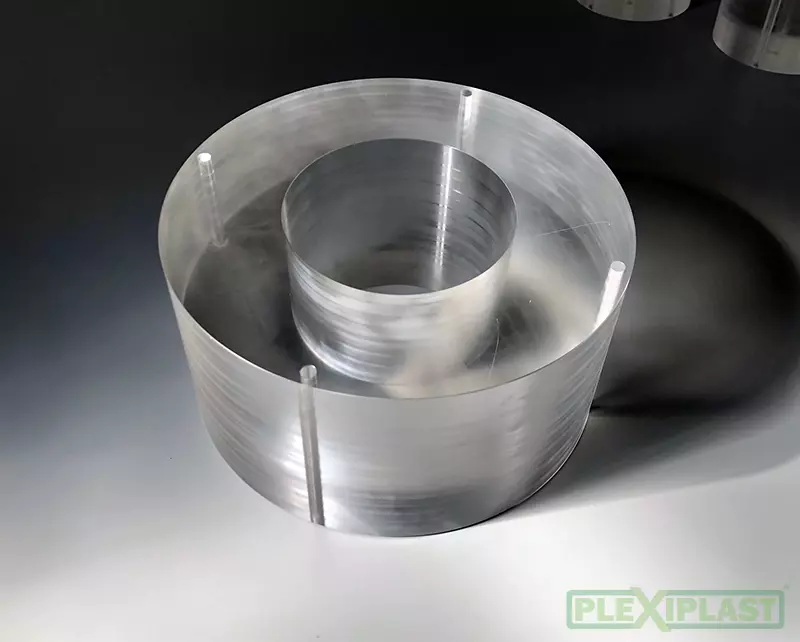
Product glued from plexiglass blocks and then machined
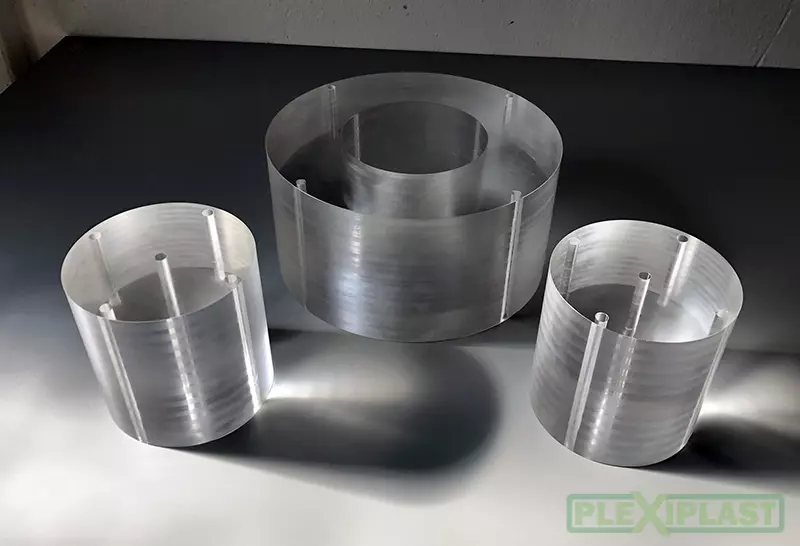
Product glued from plexiglass blocks and then machined
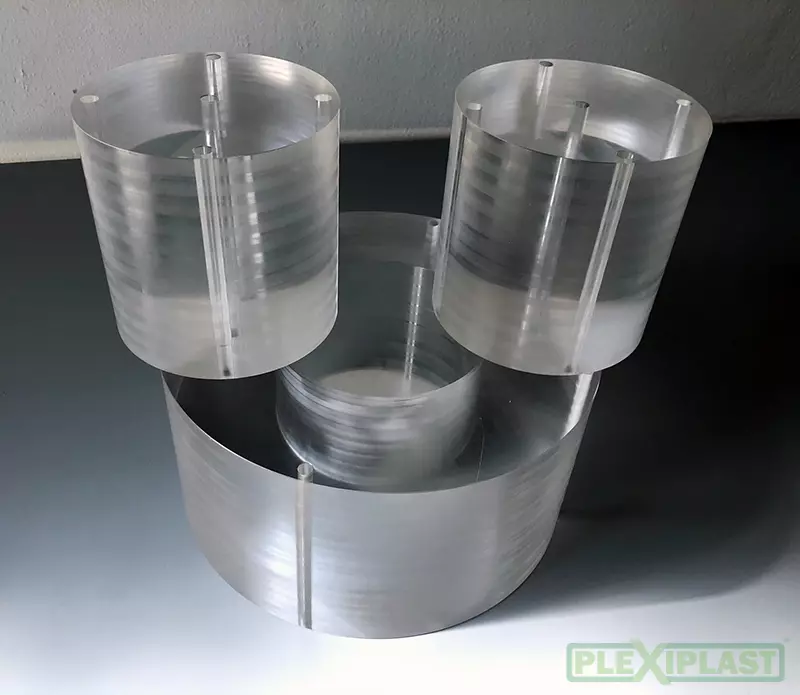
Product glued from plexiglass blocks and then machined
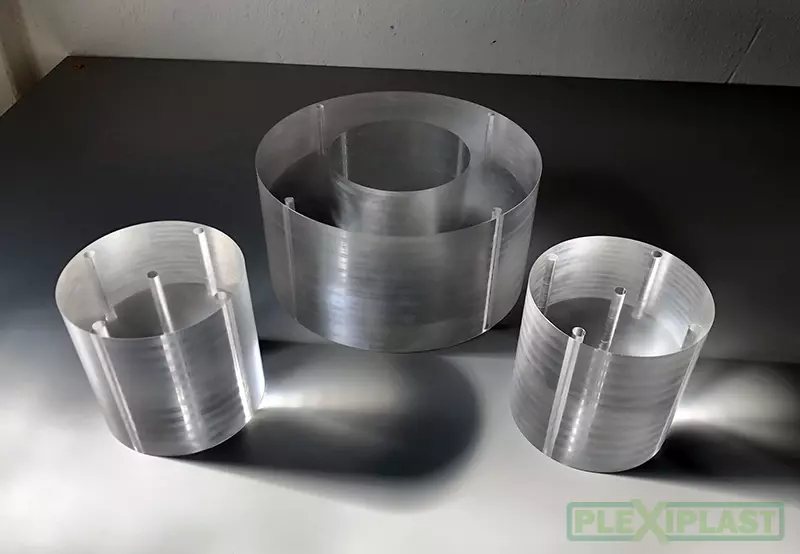
Product glued from plexiglass blocks and then machined
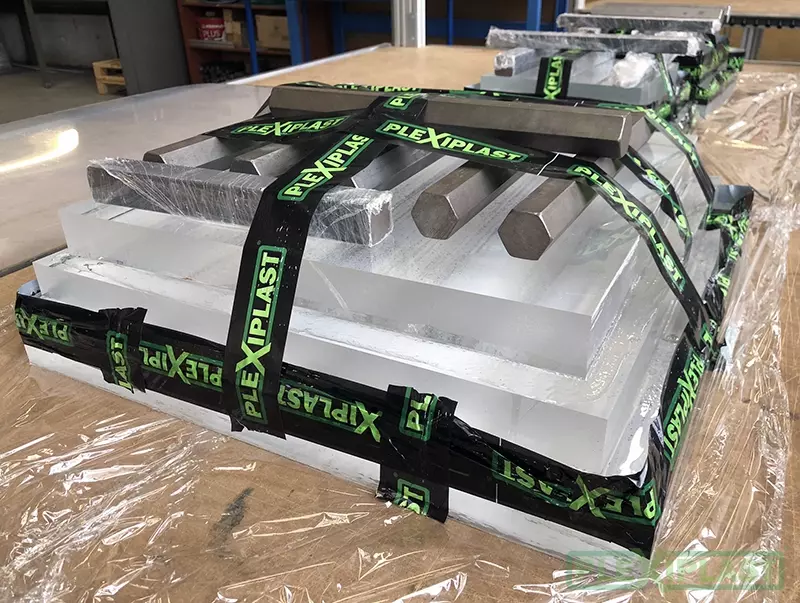
Glued layering of Plexiglas blocks (each block is 40 mm thick)
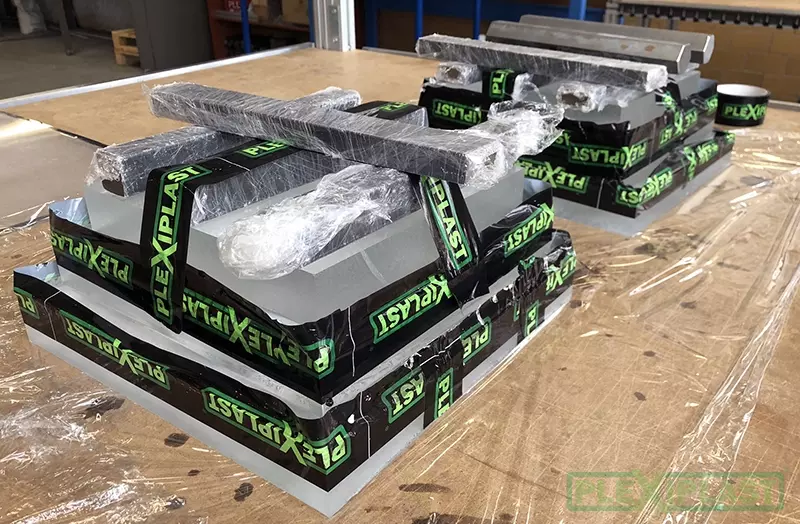
Surface bonding
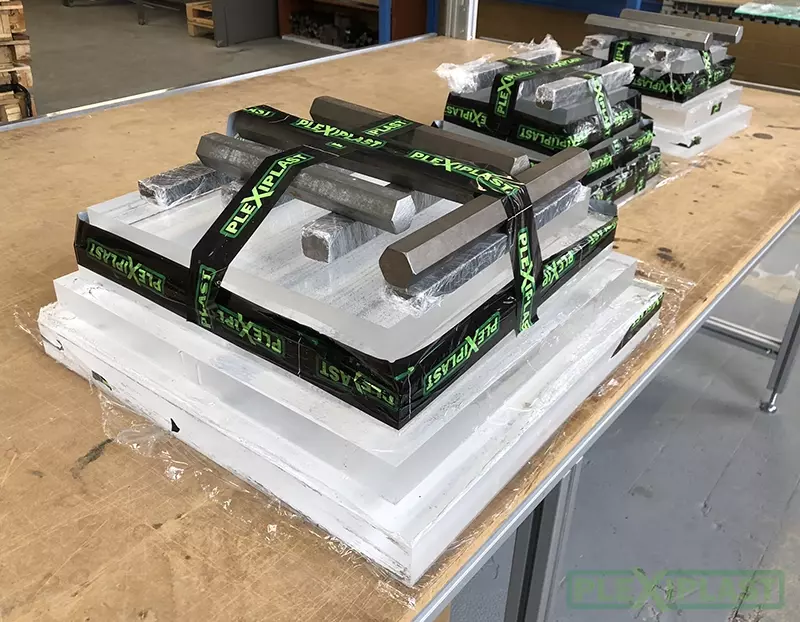
Bonding surfaces
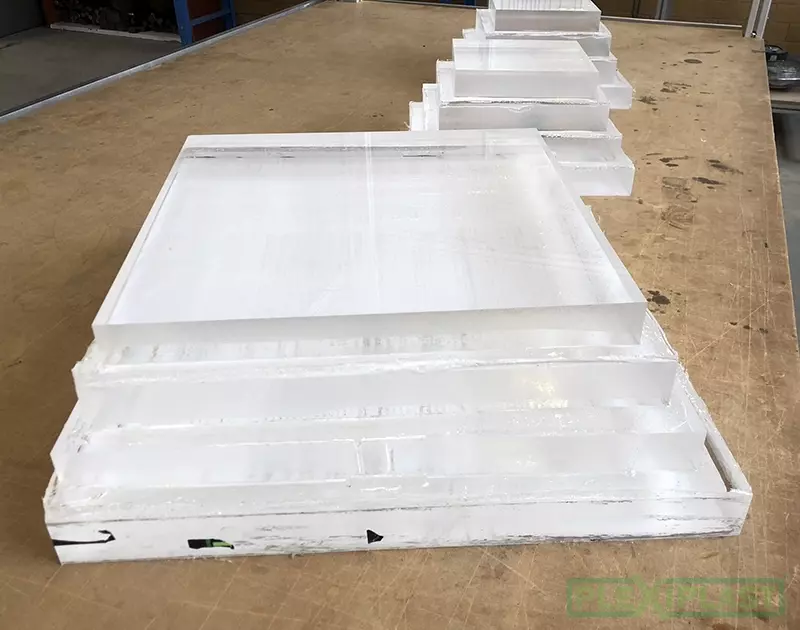
Bonding surfaces
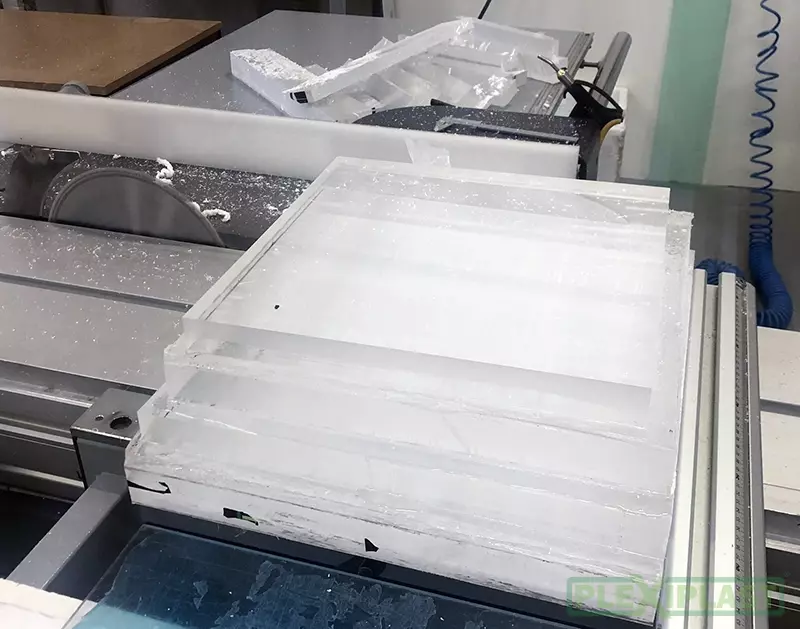
Bonding surfaces
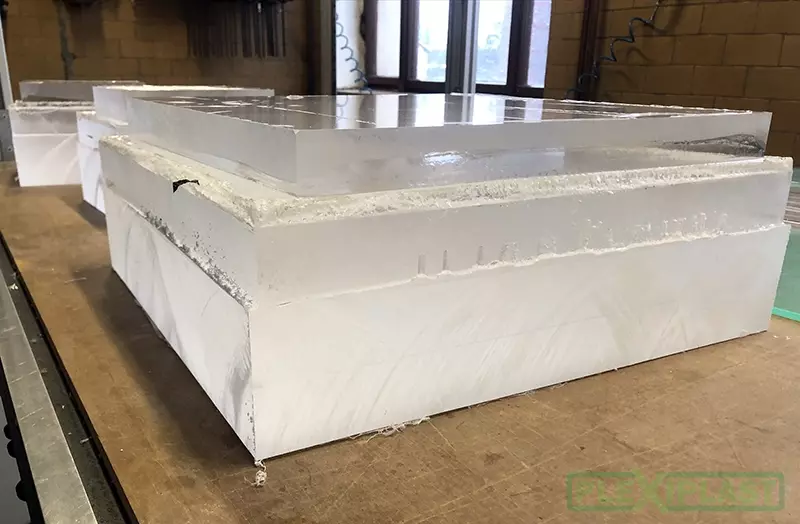
Bonding surfaces
Bonding plexiglass covers, display cases and plastic boxes
One of the main areas of our contract manufacturing is the production of bonded plexiglass covers, display cases and display boxes.
We first cut the individual parts to the required dimensions and then join them using a suitable adhesive technique.
Using this method, we manufacture, for example:
- Transparent protective covers for machinery and equipment.
- Plexiglas display cabinets and presentation boxes.
- Covers for models and collectables.
- Advertising and exhibition structures.
- Plexiglas stands and bases.
- Bespoke plastic boxes.
- Designer and technical assemblies made from plexiglass.
Depending on the design, bonding can also be combined with other technologies, such as CNC milling, laser cutting or mechanical assembly.
Bonded plexiglass covers, display cases and bespoke products
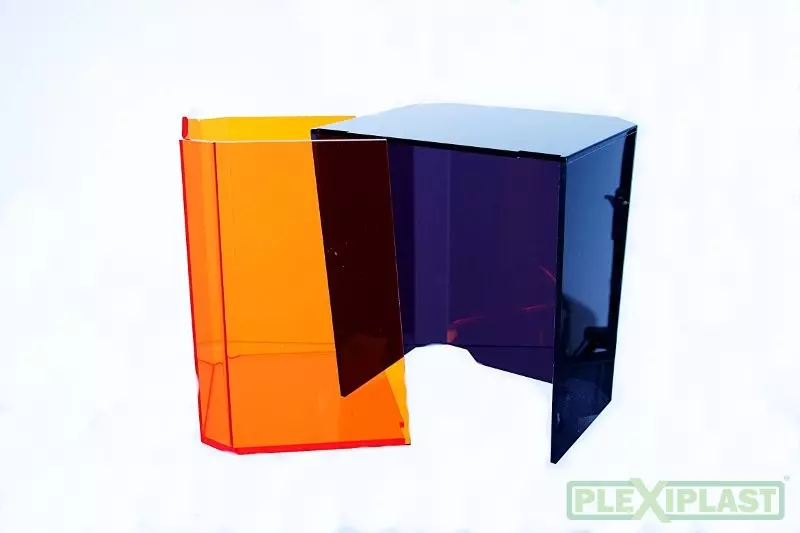
Glued covers, plexiglass
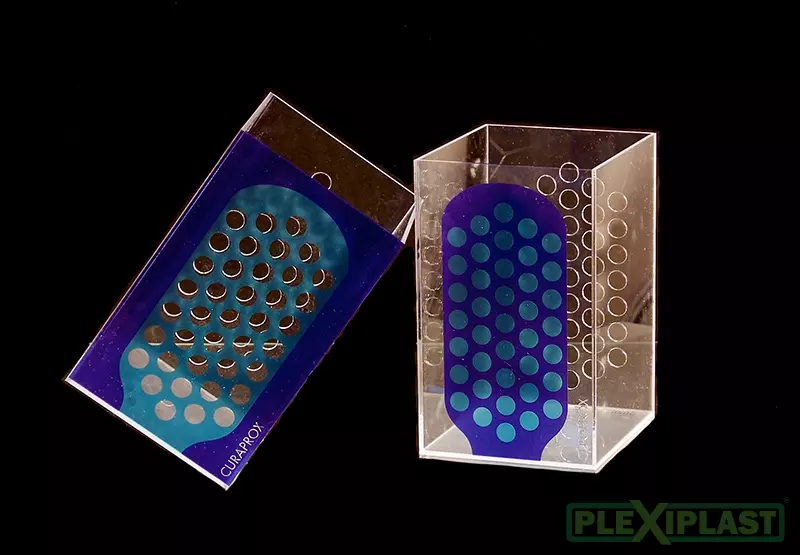
Pentagonal bonded plexiglass covers
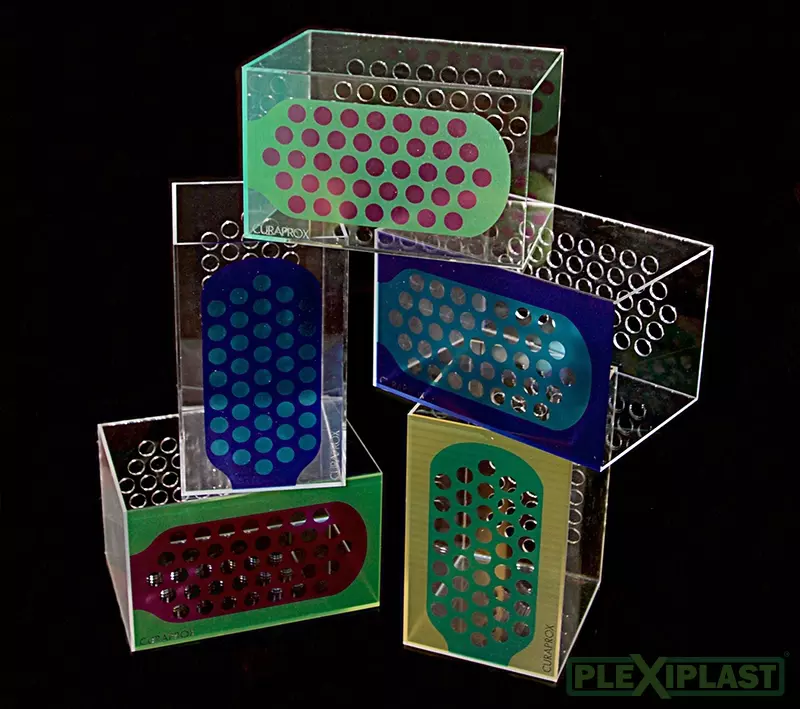
Glued plexiglass covers
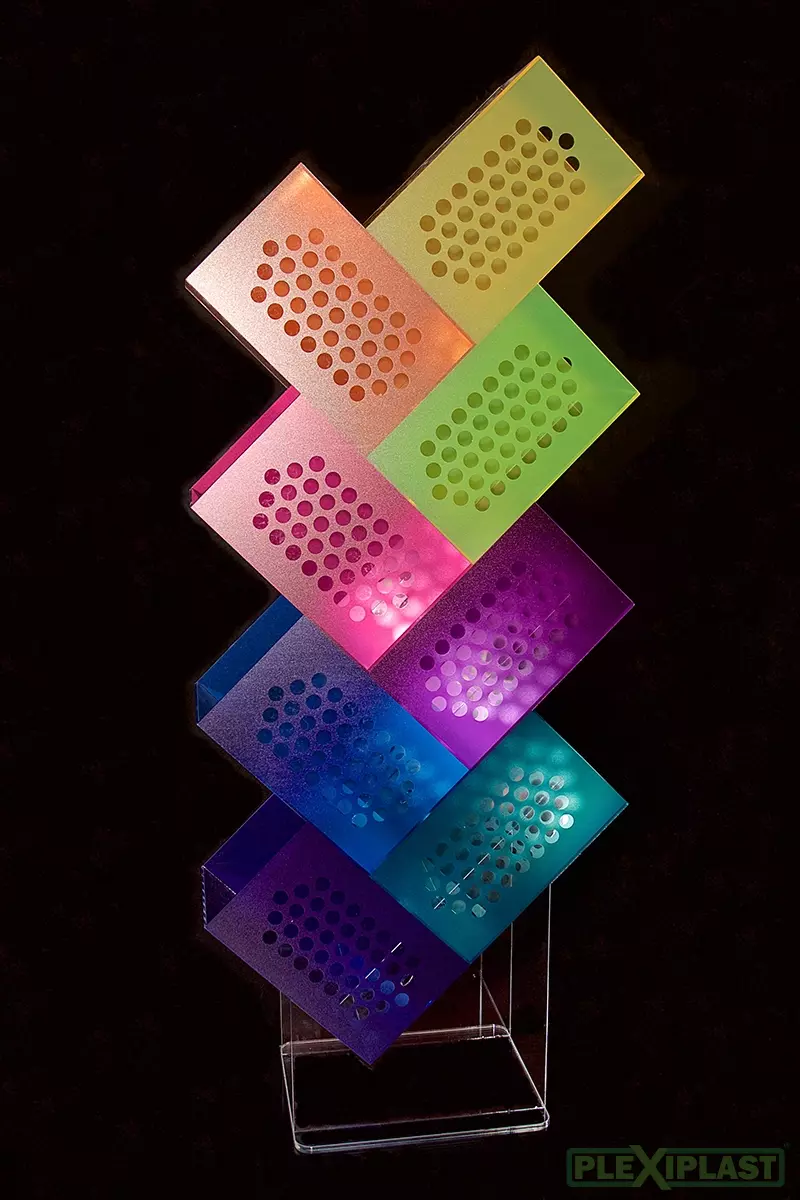
Moulded plexiglass product
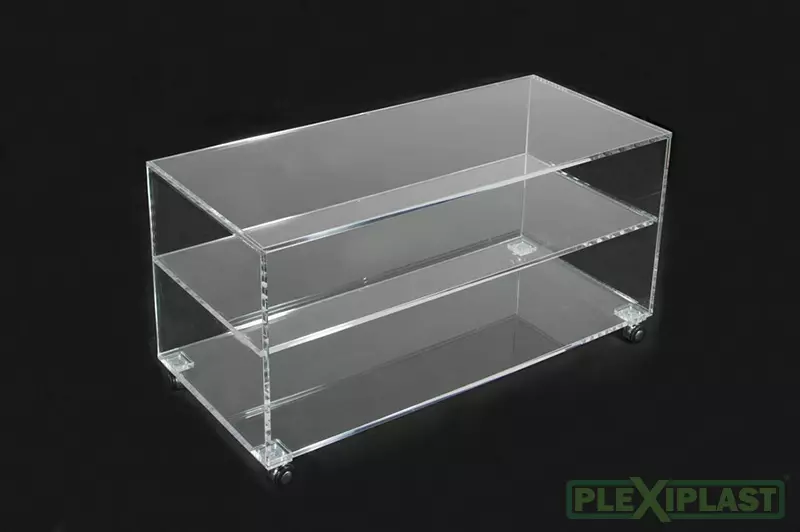
Table glued with one-component adhesive
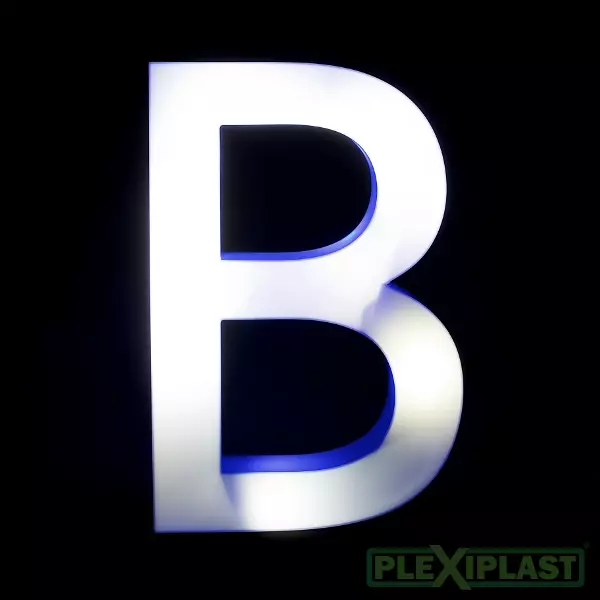
Double color channel letter 'b'
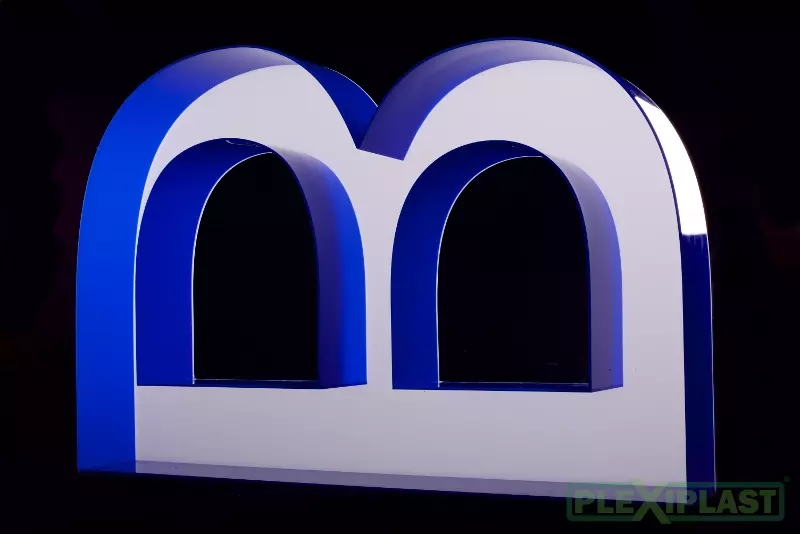
Box letter
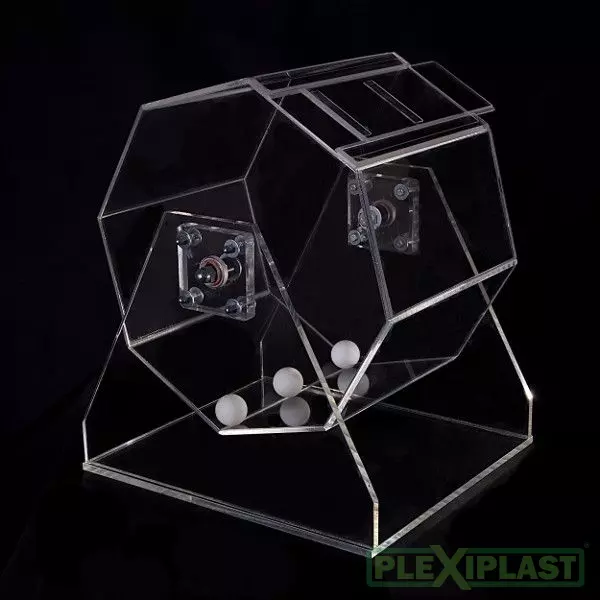
Lottery draw machine sample
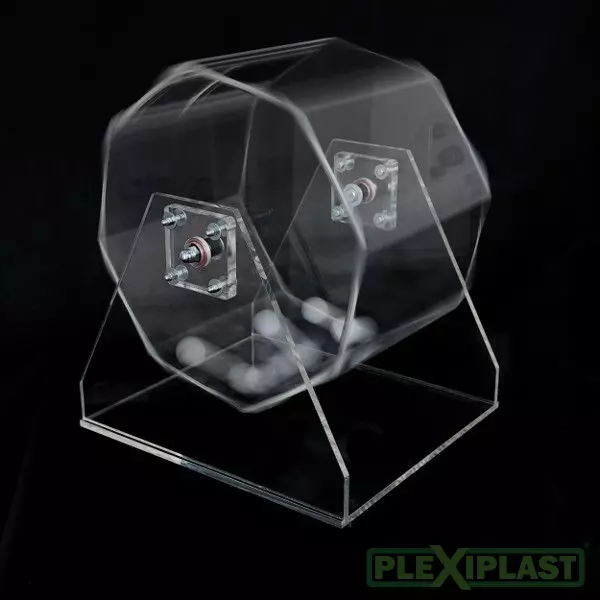
Lottery draw machine in operation
Bonding XT and GS plexiglass – differences in materials
When selecting the appropriate technology, we also take into account the method used to manufacture the plexiglass.
Extruded PMMA XT plexiglass may contain higher internal stresses, which are significant when certain adhesive systems are used. It is therefore important to select the correct technology and assess how the material has been processed previously.
Cast PMMA GS plexiglass offers excellent machinability and is also used for bonded products with more demanding technical and aesthetic requirements.
Both material variants can be bonded using appropriate methods, but it is not correct to automatically apply the same technology to all applications.
We tailor our choice of material to the product’s design, the required edge quality, the type of load and other manufacturing processes.
Bonding polycarbonate and other plastic materials
In addition to plexiglass, polycarbonate and other engineering plastics can also be combined for selected orders.
However, it is important to bear in mind that different plastics have different chemical properties, and it is not possible to automatically use the same adhesive for all of them.
Polycarbonate (PC) requires a suitably chosen joining method, taking into account its mechanical properties, any internal stresses and its sensitivity to certain chemicals.
For PET-G, PVC-U and other plastics, we assess the suitability of the bonding technology based on the specific type of material and the intended application.
Some engineering plastics, such as polyethylene or polypropylene, are difficult to join using standard adhesive methods. For these materials, welding or mechanical fastening may be more suitable.
We therefore always assess the material and the required properties of the joint before commencing production.
Custom and mass production of bonded plexiglass products
We offer bespoke bonding of individual components, as well as the production of prototypes, small batches and repeat production orders.
Our services are used by industrial companies, advertising agencies, manufacturers of technical equipment, architectural firms and other clients.
Depending on the nature of the order, we can arrange for the manufacture of individual semi-finished products, their machining, bonding and subsequent assembly.
By integrating our own technologies, we offer the manufacture of bonded plastic products in accordance with standardised technical documentation.
How do I book a professional plexiglass fitting service?
To enable us to prepare a quotation, please send us some basic information about the product you require.
We recommend that you include:
- Material – for example, PMMA XT or GS plexiglass.
- The thickness of the boards and the dimensions of the individual parts.
- Required joint type – butt joint, mitre joint or edge joint.
- The required optical quality and the final appearance of the product.
- Dimensions of the finished product and number of items.
- Technical drawing – ideally in PDF, DXF, DWG or STEP format.
- Terms of Use – indoor, outdoor, mechanical or chemical stress.
- Required follow-on operations – CNC milling, polishing or assembly.
If you do not yet have the full set of drawings ready, you can send us a simple sketch or a photograph of the design you require.
Based on the documentation provided, we will assess the suitability of the material, recommend a bonding method and prepare a bespoke quotation.
Do you need professional plexiglass bonding, the manufacture of bonded covers, display cases or laminated plexiglass blocks? Please contact PLEXIPLAST via the enquiry form or by email at info@plexiplast.cz.
Related products and technologies
Take a look at our other options for processing plexiglass and the bespoke manufacture of plastic products:
- Bespoke plexiglass covers
- Plexiglas display cabinets and display cases
- CNC milling and engraving of plastics
- CNC laser cutting of plexiglass
- Bending Plexiglas and Polycarbonate
- Relief and inlaid lettering
Technical Advisor
Contact our experienced technical advisor to find out all about the prices and processing options for the materials listed
BY PHONE
VIA EMAIL