
CNC aluminium milling – machining of aluminium plates and sheets
Bespoke CNC machining of aluminium plates and sheets
The company PLEXIPLAST s.r.o. offers bespoke CNC milling and mechanical machining of aluminium plates, sheets and other suitable aluminium semi-finished products in accordance with individual technical specifications.
Using CNC milling machines, we manufacture precision-shaped parts, structural and assembly panels, cover plates, technical components, advertising elements and other aluminium components.
As well as aluminium sheets and solid panels, we also process aluminium composite materials, such as DIBOND and other bonded panels. We always adapt our machining techniques to the specific material, its thickness and the required result.
We offer single-off production, prototype parts and repeat production runs for industrial companies, manufacturers of technical equipment, engineering firms and advertising producers.
PLEXIPLAST – bespoke CNC aluminium milling to drawings and individual customer requirements.
CNC aluminium milling – precision shaping
CNC aluminium milling is a machining process in which a rotating cutting tool removes material in accordance with a pre-programmed production programme.
Computerised control makes it possible to precisely replicate the tool’s movements and produce parts with identical shapes in accordance with the technical specifications provided.
This technology is particularly suitable for the manufacture of flat and shaped components from aluminium plates and sheets, the design of which requires precise contours, holes, recesses or other machined features.
We use CNC milling, for example, for:
- Profile milling of aluminium sheets and plates.
- The production of irregular shapes and structural cut-outs.
- Milling of mounting and process holes.
- Milling of grooves, pockets and local recesses.
- Finishing of edges, chamfers and selected profiles.
- Preparation of aluminium parts for further assembly.
- The manufacture of technical and promotional components.
- Repeated production in accordance with the approved documentation.
The suitability of a particular machining process depends on the type of aluminium alloy, the thickness of the blank, the geometry of the product and the required tolerances.
Milling of aluminium sheets, plates and structural semi-finished products
Aluminium materials are widely used in industry thanks to their favourable strength-to-weight ratio, good machinability and resistance to corrosion in a range of common environments.
For bespoke manufacturing, we process suitable aluminium semi-finished products according to their mechanical properties and technological feasibility.
CNC milling of aluminium sheets
Aluminium sheets are suitable for the manufacture of flat covers, infill panels, mounting panels, advertising elements and other components.
CNC milling enables the creation of irregular contours, precise cut-outs and holes for the subsequent assembly or fastening of the product.
With thinner sheets of metal, it is important to clamp the material correctly and to minimise vibrations or deformation during machining.
CNC milling of solid aluminium plates
Solid aluminium plates can be used to manufacture structural components, assembly elements, panels and other technical parts.
Unlike simple material cutting, CNC milling also allows grooves, pockets and specific structural features to be created to the required depth.
When machining thicker materials, we assess the required material removal, the properties of the alloy, the clamping options and the machine’s process parameters.
Machining of various aluminium alloys
Individual aluminium alloys can vary significantly in terms of strength, hardness, ductility and suitability for machining.
That is why, when preparing an order, we take into account the specific designation of the material and its condition.
We recommend that customers specify the grade of the aluminium alloy directly in the production drawing or technical specification.
We assess the machining options for individual alloys on a case-by-case basis, depending on the product design and the technological equipment available.
CNC milling of holes, grooves, pockets and recesses
One of the main advantages of CNC machining is the ability to produce not only the external shape of an aluminium component, but also its functional structural elements.
Milling of holes and internal cut-outs
We produce holes, irregular through-cut-outs and other shapes in aluminium sheets in accordance with the technical documentation.
These elements are used, for example, for the assembly of fasteners, the fitting of instruments, the routing of cabling or the positioning of other structural components.
Milling grooves and pockets
CNC milling enables recesses to be cut to a predetermined depth in the material.
Grooves and pockets can be used, for example, to accommodate additional components, position fasteners or create the required structural geometry.
Countersinking and modifying mounting holes
Depending on the required geometry, we also carry out the preparation of recesses, hole modifications and selected finishing operations.
It is advisable to specify the key functional dimensions in the production drawing, including the required tolerances.
Contour milling and edge machining
Machining makes it possible to create both straight and more complex contours.
Depending on the specific product, it is also possible to round off sharp edges, create chamfers or carry out other modifications to the edge surfaces.
We determine the required finish quality with regard to the part’s subsequent use.
Custom manufacture of aluminium structural and engineering components
We use CNC milling in the manufacture of components for industrial machinery, technical equipment, electronics, assembly structures and other applications.
Typical products include:
Assembly and structural plates – aluminium components with precisely defined contours and mounting holes.
Cover and front panels – components designed to cover equipment, house control elements or be incorporated into production assemblies.
Technical products – simpler positioning and assembly components based on individual documentation.
Fillers and structural components – moulded parts with the required cut-outs, grooves or mounting features.
Advertising and information elements – aluminium components for corporate signage, display systems and design structures.
Prototype components – individual parts intended to verify the design before mass production begins.
We assess each product in terms of the required geometry, dimensional accuracy, material and technical feasibility.
Examples of CNC milling of aluminium plates and bespoke manufacturing
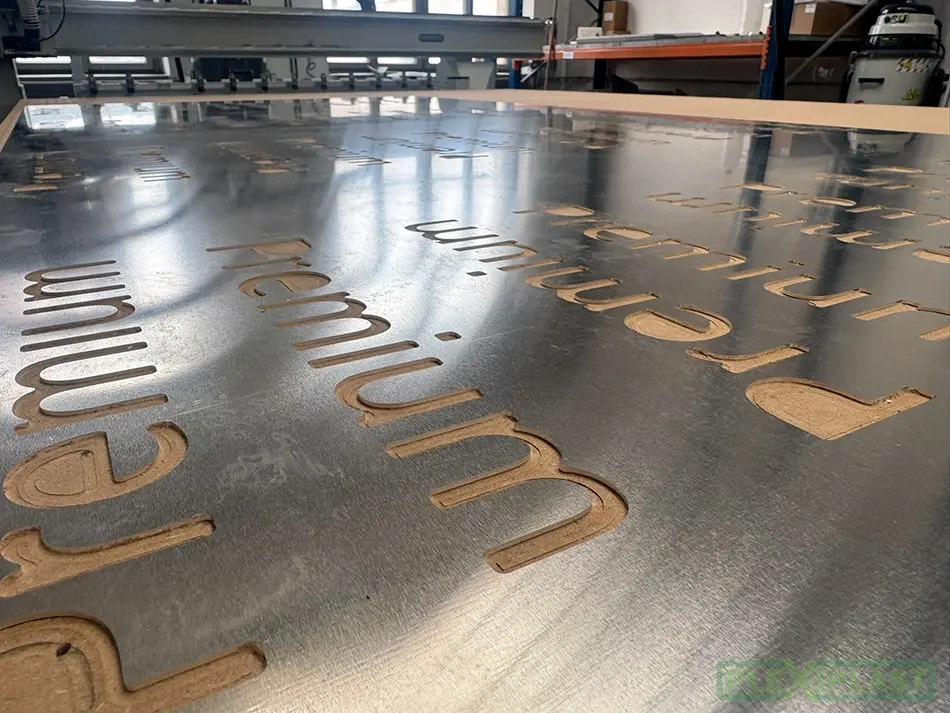
Custom profile milling of aluminium sheet metal
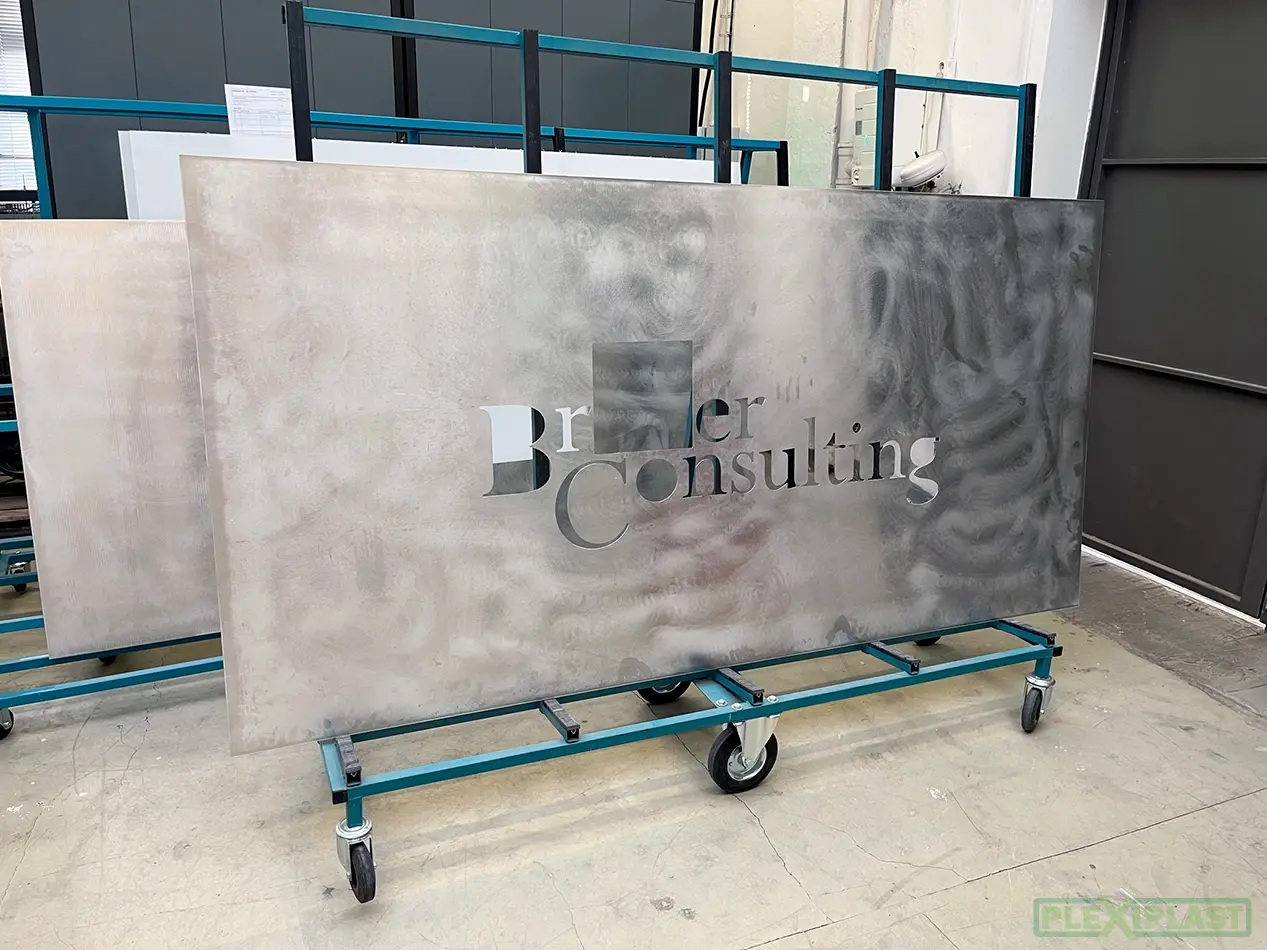
Custom-made aluminium structural component
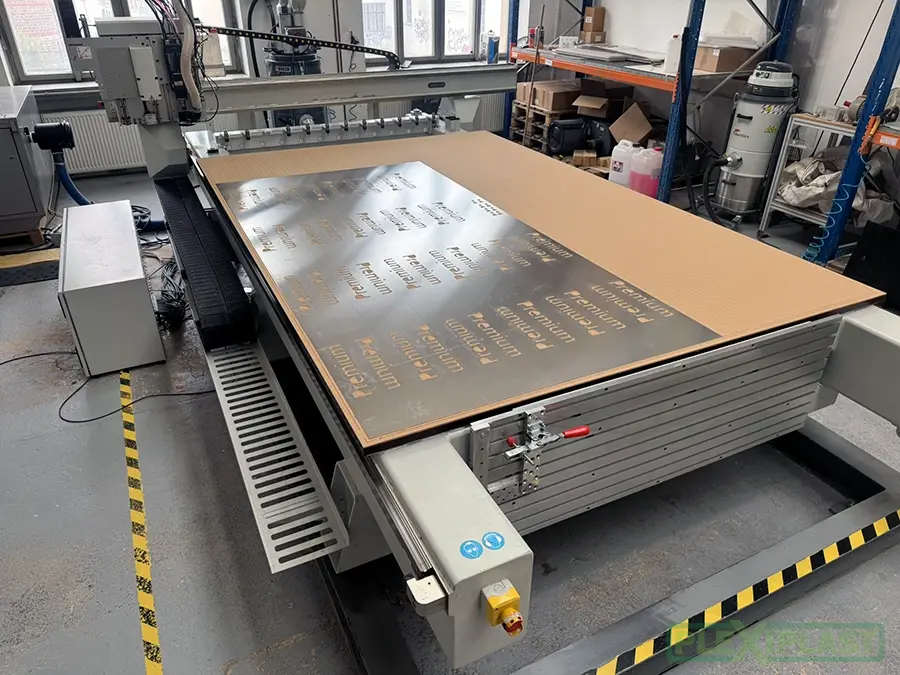
CNC-machined aluminium component with mounting holes
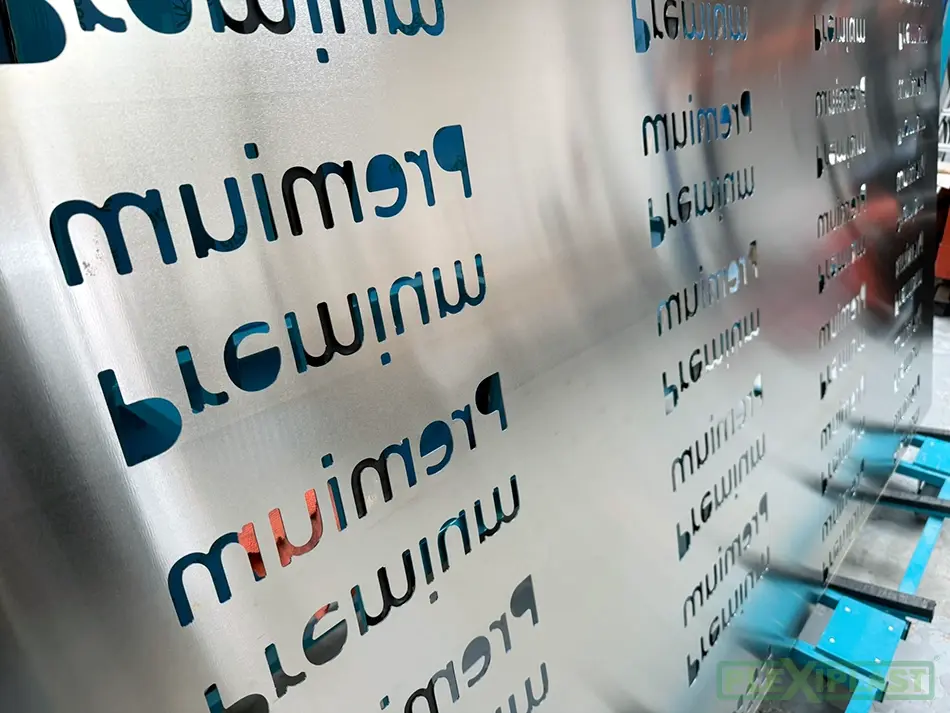
Detail of CNC machining of an aluminium component
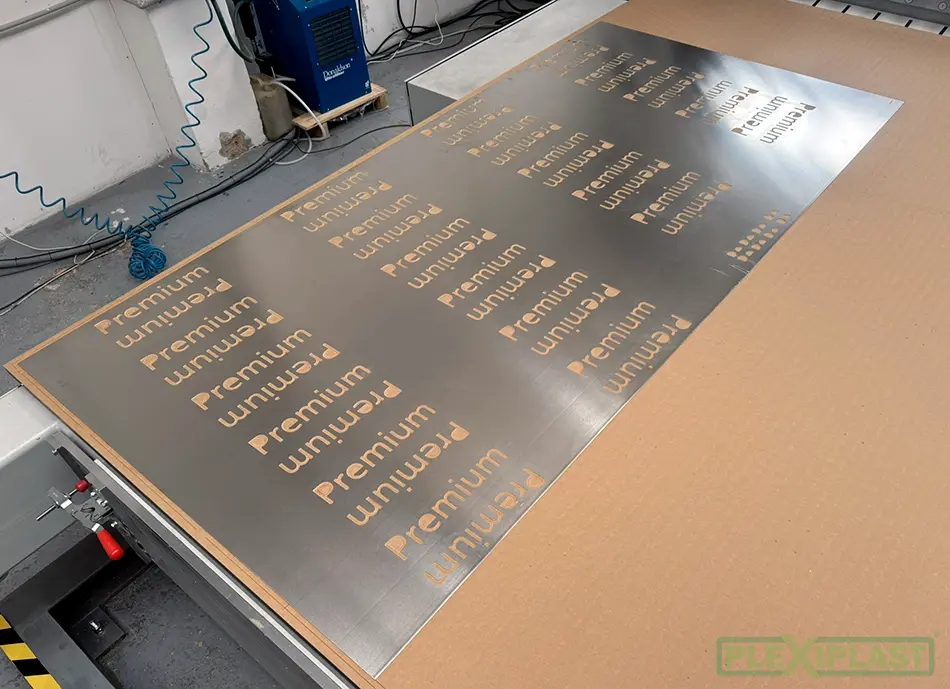
Custom-made aluminium structural component
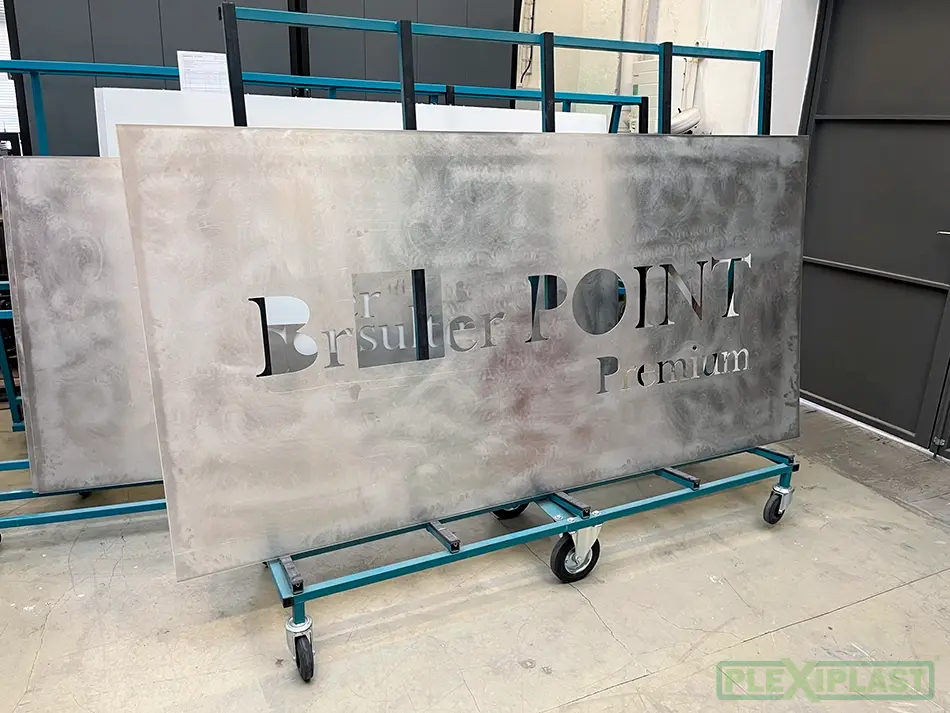
CNC milling of a solid aluminium plate
CNC milling of aluminium composite panels – DIBOND and BOND
In addition to solid aluminium sheets and plates, we also process aluminium composite panels, known as bonded panels or aluminium sandwich panels.
These panels have a different construction to solid aluminium. They usually consist of two thin aluminium outer layers and an inner core.
Thanks to this design, they are relatively light whilst remaining sufficiently rigid for a range of advertising, information and structural applications.
Shaped milling of composite panels
Using CNC machinery, we produce shaped cut-outs, holes and other structural components from composite panels in accordance with the data supplied.
Parts prepared in this way can be used, for example, in the manufacture of advertising boards, company signs, wayfinding systems, interior panels and other products.
V-grooving of composite panels for bending
With suitable types of bonded boards, it is also possible to mill grooves designed for subsequent bending of the panel.
In this process, a section of the material, including the core, is milled away from the reverse side, whilst the visible surface layer remains intact.
This makes it possible to create precise bend lines and produce three-dimensionally shaped panels, advertising displays or other structural elements.
The groove depth, tool geometry and bend radius must correspond to the specific type of composite panel and the recommended manufacturing process.
Milling solid aluminium and grooving aluminium composite panels are two distinct technologies which we carry out depending on the nature of the material and the production specifications.
CNC engraving and marking of technical components
In addition to contour milling, we can also provide mechanical engraving of aluminium components, depending on the material and the required geometry.
Engraving makes it possible to create inscriptions, symbols, lines or other design and informational elements on the surface of a material.
It is used, for example, in:
- Technical and identification labels.
- Descriptions of control panels.
- Manufacturer’s and assembly marks.
- Scales and orientation symbols.
- Company logos and product labelling.
We choose the depth and method of engraving based on the required legibility, the size of the design and the tools available.
Where there are specific requirements regarding surface treatment or the long-term durability of markings, it is advisable to determine the product’s operating conditions in advance.
Dimensional accuracy and the quality of aluminium machining
In the manufacture of engineering components, it is not only the final geometry that may be important, but also the accuracy of individual holes, dimensions and the relative positions of structural elements.
The achievable accuracy of CNC milling depends primarily on:
- The type and dimensions of the aluminium semi-finished product.
- The geometry and thickness of the workpiece.
- The method of clamping the material.
- The milling tool used.
- The required depth and extent of machining.
- The technological capabilities of the equipment.
For dimensionally critical features, we recommend specifying the exact tolerances directly on the production drawing.
Before production begins, we assess whether the required precision and finish can be reliably achieved using the chosen manufacturing process.
CNC milling of aluminium in accordance with technical drawings
We carry out bespoke CNC machining in accordance with the technical or design documentation provided.
Drawings and digital files that clearly specify the dimensions and geometry of the required parts are particularly suitable for production planning.
Production drawings in PDF, DXF and DWG formats
For flat and contoured milled parts, technical drawings and vector data in PDF, DXF or DWG formats are particularly suitable.
The documentation should include the overall dimensions, the positions of the holes, the thickness of the blank and any other design requirements.
3D models and the STEP format
For more complex products, a 3D model in STEP format may also be useful.
This enables a more accurate assessment of the design, the required geometry and the appropriate manufacturing process.
However, the provision of a 3D model does not automatically mean that all spatially complex parts can be manufactured on every CNC machine. We assess technological feasibility on a case-by-case basis.
Material, tolerances and surface finish requirements
The specification should include details of the required aluminium alloy, its thickness and, where applicable, any requirements regarding the surface finish.
If a customer requires subsequent surface treatments, it is advisable to specify these at the time of enquiry, as they may affect both the dimensions and the manufacturing process.
Single-piece CNC aluminium milling and repeat production runs
We offer the manufacture of individual bespoke parts, prototypes, small batches and repeat production in accordance with approved documentation.
Single-off production is particularly suitable for development projects, design validation, equipment repairs or the manufacture of specific components.
For repeat orders, pre-prepared production programmes and manufacturing processes can be used to produce parts of the same shape.
We always assess the specific production capacity, delivery times and cost-effectiveness of an order based on its complexity, the materials involved and the quantity required.
Why choose PLEXIPLAST for CNC aluminium milling?
The main advantage of working with PLEXIPLAST is the ability to combine CNC machining of aluminium, plastics and aluminium composite materials within a single production order.
This may be particularly beneficial for customers who require assemblies combining aluminium structural parts with plastic covers, transparent panels or other components.
As well as aluminium milling, we also offer:
- CNC milling of plexiglass, polycarbonate and engineering plastics.
- CNC laser cutting and engraving of plexiglass.
- Cutting and formatting plastic sheets.
- The manufacture of plastic covers and structural components.
- Bonding, bending and finishing of plastics.
- Milling and shaping of aluminium composite panels.
Thanks to the integration of various technologies, customers can request multiple types of components from a single manufacturing partner.
How do I order bespoke CNC milling of aluminium plates?
To enable us to prepare a quotation, please send us some basic information about the aluminium parts you require.
We recommend that you include:
- Material – the designation of the aluminium alloy or the required type of aluminium composite.
- Dimensions of the semi-finished product and its thickness.
- Required quantity and any repeat orders.
- Technical documentation – ideally in PDF, DXF, DWG or STEP format.
- Required tolerances and critical functional dimensions.
- Machining capabilities – profile milling, holes, grooves, pockets or engraving.
- Requirements regarding appearance and edge finishing.
- Any further operations or requirements for subsequent assembly.
Do you require CNC milling of aluminium plates, precision-shaped parts or bespoke aluminium machining to your drawings? Please contact PLEXIPLAST via the enquiry form or by email at info@plexiplast.cz.
Related materials and manufacturing technologies
Take a look at our other options for bespoke CNC machining, sheet material processing and the manufacture of engineering components:
- CNC milling and engraving of plastics
- DIBOND and BOND aluminium composite panels
- CNC laser cutting and engraving of plexiglass
- Plastic sheets and custom-cut pieces
- Advertising hoardings and information boards
- Bespoke advertising production
Technical Advisor
Contact our experienced technical advisor to find out all about the prices and processing options for the materials listed
BY PHONE
VIA EMAIL